Why your FSA or HSA question should name the expense, not the store
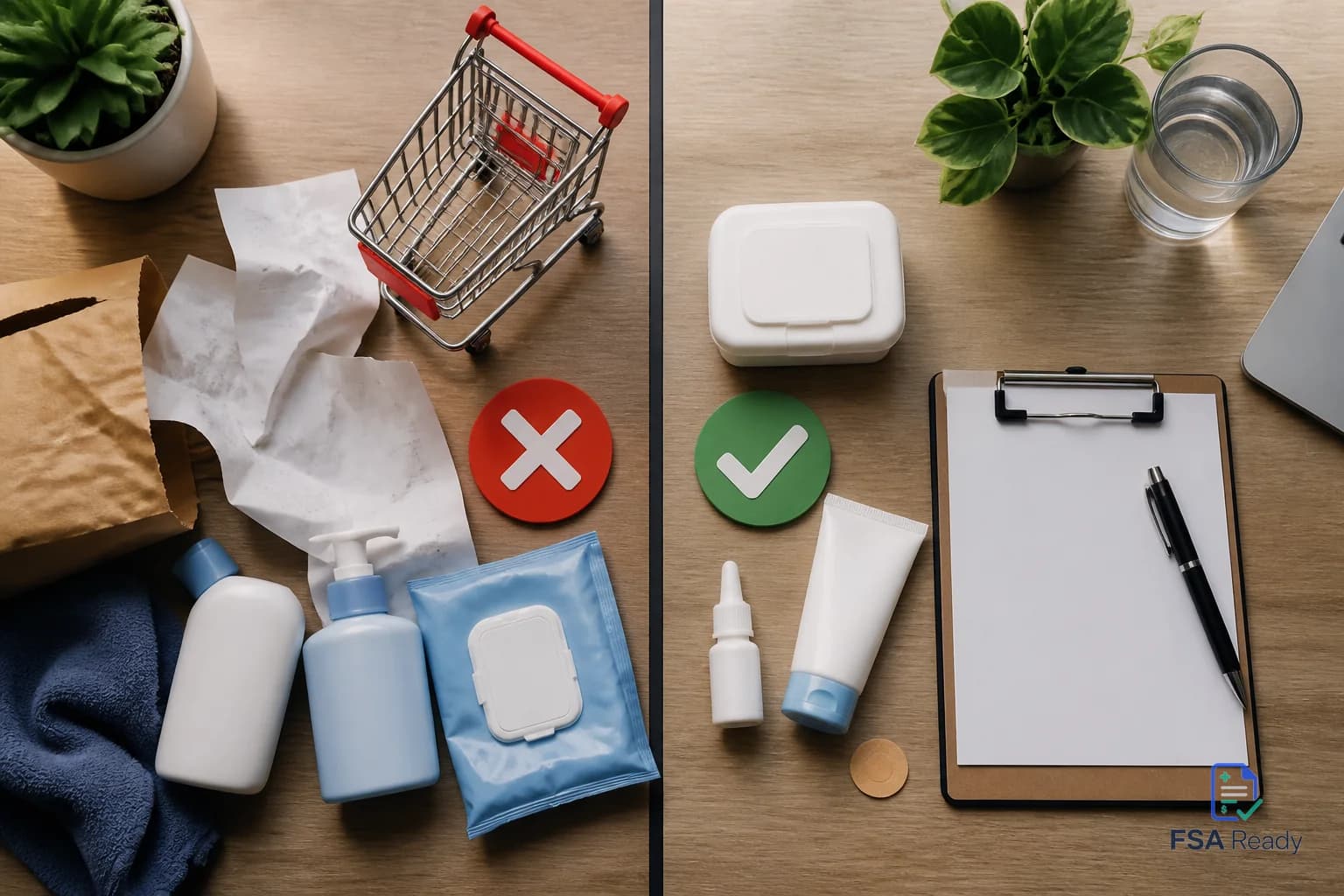
A store name feels like a shortcut. It is not much of one.
“Can I use my FSA at Target?” sounds practical, but it skips the part your plan actually cares about: what you bought, why you bought it, who used it, and whether the documentation supports the claim. One store can sell bandages, sunscreen, vitamins, shampoo, groceries, baby wipes, and a blood pressure monitor in the same trip. Those expenses do not all get treated the same way.
Direct plain English answer
When you ask an FSA or HSA eligibility question, name the actual expense instead of the store.
A better question is not “Can I use my FSA at Costco?” It is closer to: “Is this specific SPF 50 sunscreen for my spouse likely FSA eligible, and what receipt details should I save?”
That does not mean the store is irrelevant. The store can affect what your receipt shows, whether your card works at checkout, and how easy the claim is to document. But the store usually does not decide eligibility. Your plan rules, IRS related medical expense rules, the product or service, and your documentation all matter.
If you want a deeper version of that point, see Why the store does not decide FSA or HSA eligibility.
Key terms
Expense
The expense is the thing you paid for: a product, service, fee, visit, supply, prescription, device, or other charge. This is the center of the eligibility question.
If the expense is vague, the answer will be vague. “Health item” is not enough. “Digital thermometer” is better. “Monthly wellness subscription” may still be unclear without details about what is actually provided.
Merchant
The merchant is the store, clinic, website, pharmacy, marketplace, or provider that took your payment.
A merchant can sell a mix of items. A pharmacy can sell medicine and candy. A grocery store can sell eligible over the counter products and ordinary household goods. An online marketplace can list products from many sellers with very different descriptions.
Substantiation
Substantiation is the proof your plan may ask for to support the claim. Usually that means an itemized receipt or invoice, date of purchase or service, amount paid, provider or merchant name, and a description clear enough to identify the expense.
Some expenses may need more, such as a prescription or Letter of Medical Necessity, depending on the item, use, and plan rules.
Plan dependent
Plan dependent means the answer can vary by administrator, plan design, documentation standards, or facts around the purchase. If an answer is plan dependent, do not treat a generic online answer as final. Ask your plan administrator before relying on it.
Common confusion points
“My FSA card worked, so the item must be fine”
A successful card swipe is helpful, but it is not the same as claim approval. Some purchases still get reviewed later. Your plan may ask for documentation after the transaction, especially if the merchant sells both eligible and non eligible items.
That is why it is smart to keep the receipt even when the card works.
“The store has an FSA section, so everything there is safe”
Store categories can be useful for shopping, but they are not a final eligibility ruling. Product listings can be broad, outdated, incomplete, or missing the detail your plan needs. Bundles can also create trouble if one item looks eligible and another looks personal, cosmetic, or general wellness.
If the item is not obviously medical, assume you may need backup.
“The receipt says pharmacy, so that should be enough”
A receipt that only says “pharmacy” or “health department” may not show what was purchased. Plans often need the item name or service description, not just the department.
A cleaner receipt shows the itemized product or service, date, amount, merchant or provider, and payment details. If your receipt is thin, save the product page, label, invoice, or explanation from the provider before you forget where it came from.
“I bought it from a doctor’s office, so it should count”
A provider setting can support the story, but it does not automatically make every charge eligible. Some provider sold items can still be cosmetic, general wellness, convenience based, or only eligible with additional documentation.
The question is still about the expense and medical purpose, not only who sold it.
Questions to check
Before you ask whether an expense may be FSA or HSA eligible, tighten the question with these details:
- What exactly did you buy or plan to buy?
- Is it a product, service, fee, subscription, or bundle?
- Who is the expense for?
- What medical condition, treatment, diagnosis, symptom, or care need is connected to it?
- Is the item primarily medical, or could it look personal, cosmetic, fitness, comfort, or general wellness related?
- Does the receipt clearly show the item or service?
- Did you pay with an FSA card, HSA card, personal card, or another method?
- Are there non eligible items in the same purchase?
- Does your plan say this category needs a prescription, Letter of Medical Necessity, or other backup?
- If the answer is unclear, can you ask your plan administrator before buying or filing?
The goal is not to write a perfect legal memo. The goal is to give yourself and your plan enough facts to avoid guessing.
For more on building the claim before checkout, read How to build a cleaner FSA or HSA claim before checkout.
Claim packet checklist
Use this simple checklist when the store name is doing too much of the work:
- Itemized receipt or invoice
- Date of purchase or date of service
- Merchant or provider name
- Amount paid
- Product name, service description, or SKU if available
- Proof of payment, if separate from the receipt
- Product label, listing, or description for unclear items
- Provider note, prescription, or Letter of Medical Necessity if your plan requires it
- Notes showing who the expense was for, if that is not obvious
- Screenshot or saved copy of any eligibility answer you relied on
- Separate totals for mixed carts with eligible and non eligible items
Do not wait until claim time to hunt for this. Receipts fade, product pages change, and marketplace listings disappear. The boring five minute save can prevent a much more annoying resubmission later.
Informational disclaimer
This article is for general educational purposes only. It is not tax, legal, medical, financial, or benefits advice. FSA and HSA eligibility can depend on the exact expense, timing, documentation, plan rules, and personal facts. FSA Ready does not make official eligibility determinations and cannot promise reimbursement or claim approval. Always verify questionable expenses with your plan administrator.
Cautious closing
A store based question feels efficient because it is short. The tradeoff is that it hides the details that decide the claim.
If you ask about the actual expense, you get a more useful answer. You also give yourself a better shot at saving the right documentation before the receipt becomes useless.
Before you buy or file, slow the question down: What is it, who is it for, why is it medical, and what proof do you have?
If you want help turning a messy purchase into a cleaner claim prep question, try FSA Ready.