Why the store does not decide FSA or HSA eligibility
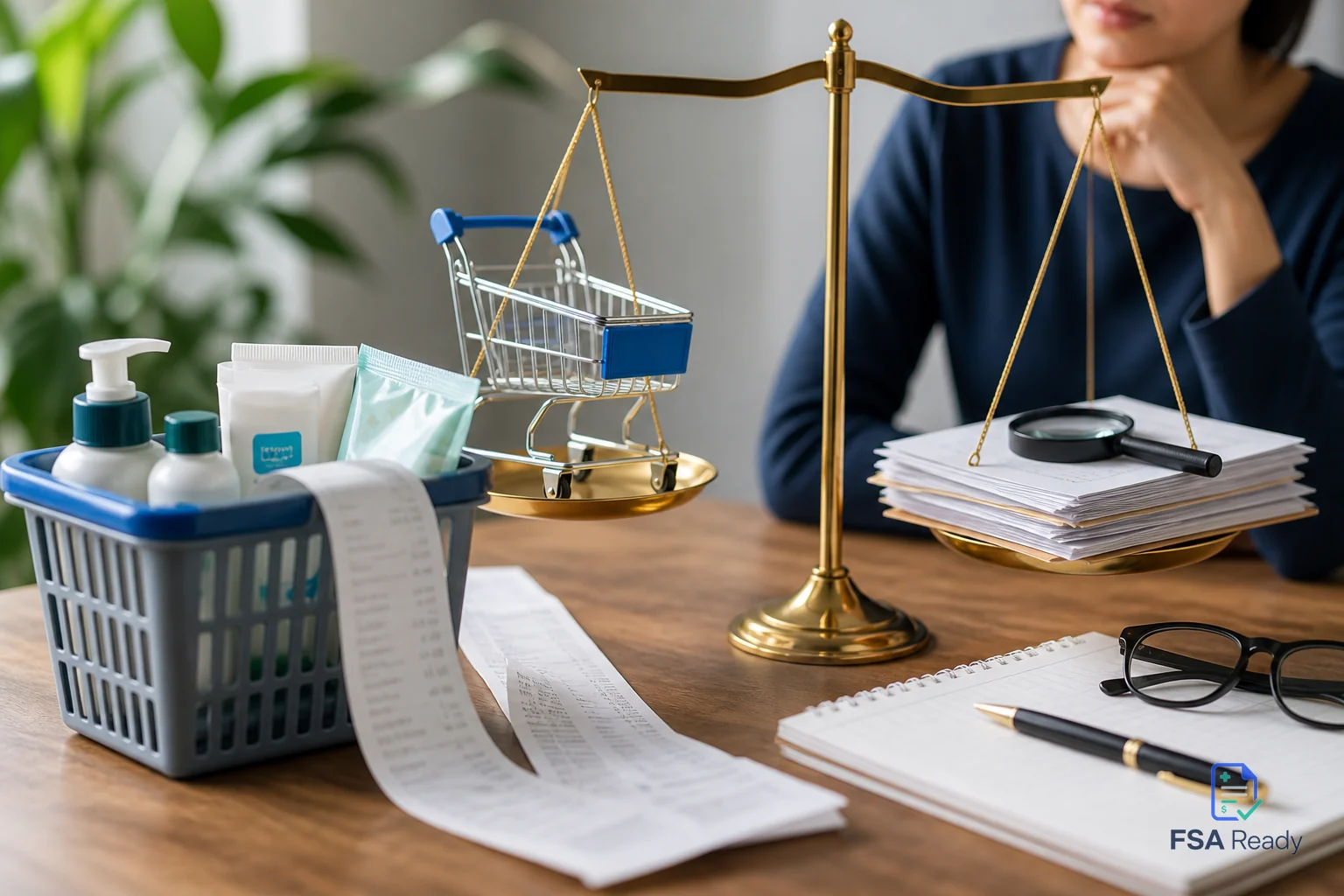
A lot of FSA and HSA confusion starts with the store.
Someone buys a product from a pharmacy and assumes it must be eligible. Someone sees an item in an online “FSA eligible” section and assumes the claim is safe. Someone pays at a medical office and assumes the expense will sail through. Then a request for documentation shows up, or a reimbursement claim gets questioned, and the whole thing feels unfair.
The store can be a clue. It is not the decision maker.
Direct plain English answer
Where you buy something usually does not decide whether it is FSA or HSA eligible. Eligibility usually depends on the type of expense, the medical purpose, who the expense is for, plan rules, and whether you can document the purchase clearly.
That means a health product bought at a grocery store could be eligible in some situations, while a product bought at a pharmacy could still be personal care, general wellness, cosmetic, or otherwise plan dependent.
The annoying tradeoff is simple: stores make shopping easy, but claims are reviewed through documentation and rules. The checkout experience and the claim review are not the same event.
If you want the safer route, do not ask only, “What store did I buy it from?” Ask, “What did I buy, what medical purpose does it serve, and can I prove that with the documents my plan expects?”
For more on why payment is not the finish line, see Why an FSA card swipe may still need follow up.
Key terms
Merchant
The merchant is the store, website, clinic, pharmacy, marketplace, or provider that sold the item or service. A merchant can help with documentation, but the merchant does not usually make the final call on your FSA or HSA claim.
Eligible expense
An eligible expense is generally an expense that fits the rules for medical care or another allowed category. Some expenses are commonly eligible, some are commonly not eligible, and some depend heavily on facts, use, plan rules, or extra documentation.
Plan administrator
Your plan administrator reviews claims and documentation under your specific plan. They may ask for more information even if the item looked eligible at checkout or appeared in a filtered shopping category.
Itemized receipt
An itemized receipt shows the details of what was purchased, not just the total charged. For claim prep, the receipt usually needs enough information to connect the expense to the item or service you are claiming.
Medical purpose
Medical purpose is the reason the item or service was purchased. This can matter when a product has both personal and medical uses, or when an expense looks like general wellness unless the facts show otherwise.
Common confusion points
“I bought it at a pharmacy, so it must count”
Pharmacies sell plenty of items that may be personal, cosmetic, convenience, food, wellness, or household products. The pharmacy setting does not turn every product into a medical expense.
A thermometer and a scented body lotion may sit a few aisles apart. The store location is the same. The eligibility analysis is not.
“The website tagged it as FSA eligible”
Online tags can be helpful, but they are not a guarantee that your plan will approve a claim or that your documentation will be enough. Tags can also be broad, outdated, incomplete, or dependent on how the product is used.
A badge is a shopping signal. Your claim packet still has to stand on its own.
“My FSA card worked, so I am done”
Not always. An FSA card transaction can still need follow up. Some systems approve transactions based on merchant coding or inventory data, but your plan may later request proof.
That is why it is smart to save documentation even when the card works.
“It came from a doctor’s office, so it is automatically eligible”
A medical provider can sell or recommend items that are not automatically reimbursable under every plan. Some services or products may be eligible, some may need more documentation, and some may be outside plan rules.
The provider source can support the story. It does not replace the claim requirements.
“The store receipt is enough”
Maybe. Maybe not. A receipt that says “health item,” “miscellaneous,” or only lists a total may not show enough. For a cleaner claim, the document should identify what was purchased, when, where, the amount, and ideally the payment details.
Questions to check
Before you rely on the store as proof, run through these questions:
- What exactly did I buy?
- Is the item or service commonly treated as medical care, over the counter medicine, first aid, vision, dental, or another recognized category?
- Could this also be viewed as general wellness, personal care, cosmetic, comfort, or convenience?
- Who was the expense for?
- Does my plan have special rules for this category?
- Would a Letter of Medical Necessity possibly be needed?
- Does my receipt clearly identify the item or service?
- If questioned later, could I explain the medical purpose without relying on the store name?
- Did I keep screenshots, product pages, provider notes, or other supporting documents if the item is not obvious?
- Have I checked with my plan administrator before buying if the expense is questionable?
If your answer is mostly “the store sold it in the health section,” the claim may be weaker than it feels.
For a related plan level reality check, read Why FSA eligible does not always mean your plan agrees.
Claim packet checklist
A clean claim packet should make the expense easy to understand without asking the reviewer to guess.
Simple checklist:
- Itemized receipt showing the merchant, date, item or service, and amount
- Proof of payment, if your plan asks for it
- Product name or service description that is specific enough to identify the expense
- Documentation showing who the expense was for, if needed
- Provider documentation, prescription, or Letter of Medical Necessity if the category may require it
- Screenshot or product page if the receipt description is vague
- Notes from your plan administrator if you asked before buying
- Any explanation needed to show medical purpose rather than general wellness or personal use
Do not pad the packet with random screenshots just to make it look official. Add documents that clarify the expense. A giant messy upload can be less helpful than three clean documents that answer the actual question.
Informational disclaimer
This article is for general informational purposes only. It is not tax, legal, medical, financial, or benefits advice. FSA and HSA eligibility can depend on federal rules, plan documents, the type of expense, how the item or service is used, and the documentation submitted. Your plan administrator makes determinations for your specific plan. Always verify questionable expenses with your plan administrator before relying on reimbursement.
Cautious closing
The store can point you in the right direction, but it should not be your whole eligibility argument.
A stronger claim starts with the expense itself: what it is, why it was purchased, who it was for, and whether your documents prove the story. That is less convenient than trusting a shelf label or checkout badge, but it gives you a much better chance of avoiding a messy follow up.
If you want help turning a purchase into a clearer claim prep plan, use FSA Ready to organize the eligibility question and next documentation steps: https://fsaready.com/?utm_source=mdx.