What proof should you save for a questionable FSA purchase
Short intro
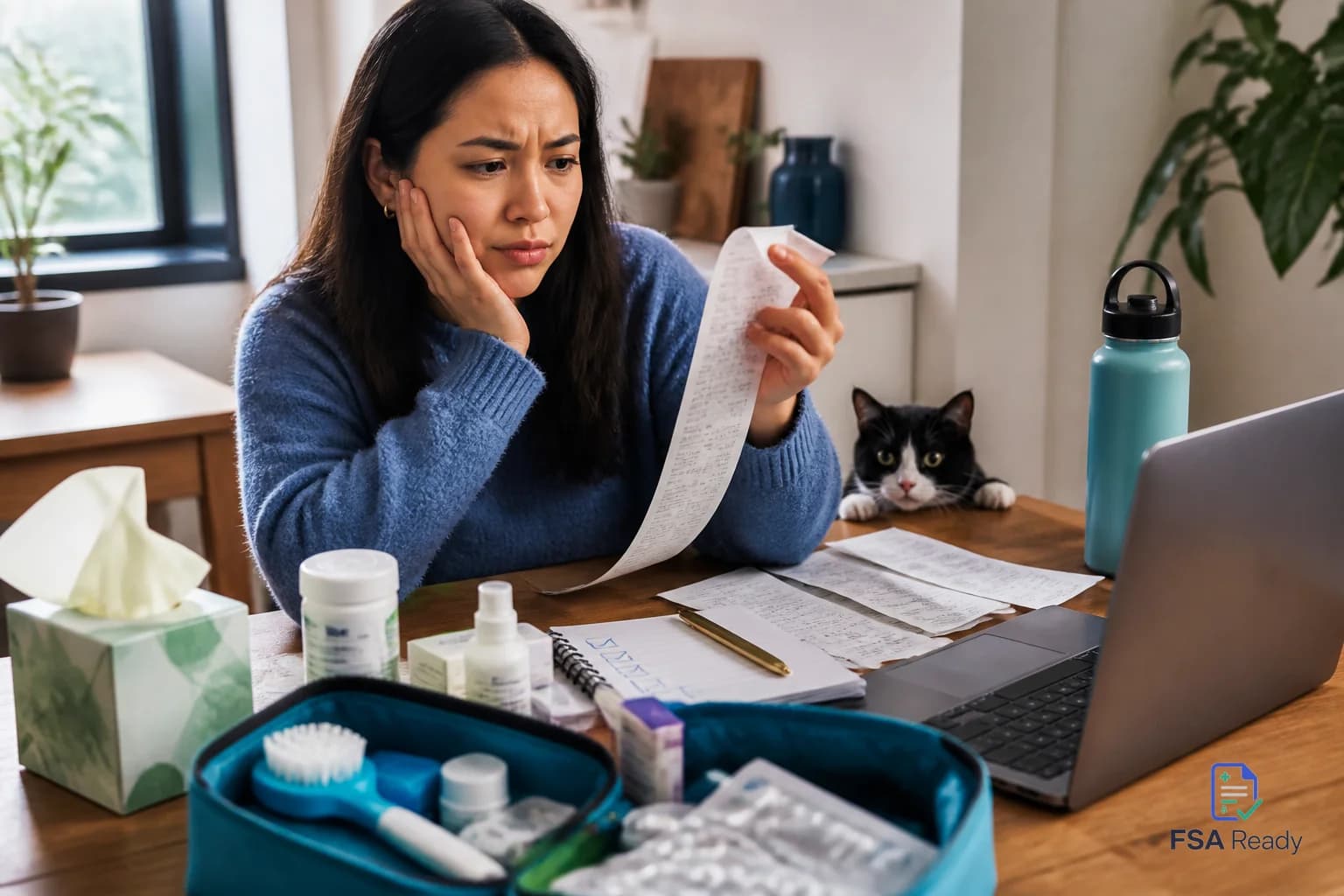
A questionable FSA purchase usually feels fine at checkout. The problem shows up later, when the plan asks for proof and all you have is a vague receipt, a product name, and a half remembered reason you bought it.
That is where people lose time. Not because the expense is automatically wrong, but because the claim packet does not explain the purchase clearly enough.
If an item is obviously medical, documentation may be simple. If it sits near the edge of medical care, general wellness, personal care, or convenience, save more than the receipt.
Direct answer
For a questionable FSA purchase, save anything that helps show four things:
- What you bought
- When you bought it
- How much you paid
- Why it may be connected to medical care under your plan rules
At minimum, that usually means an itemized receipt. For gray area purchases, you may also want the product page, packaging details, a prescription or Letter of Medical Necessity if your plan asks for one, and any written notes from your plan administrator.
None of this guarantees reimbursement. It just gives your plan a cleaner record to review. A strong packet answers obvious questions before someone has to come back and ask them.
If your receipt is thin, start with What an itemized FSA receipt needs to show.
Key terms
Itemized receipt
An itemized receipt shows the merchant, date, amount, and the specific product or service purchased. A card statement usually is not enough by itself because it only proves that money moved. It does not prove what the purchase was.
For example, a pharmacy receipt that says “health item” may not be as helpful as one that lists the exact product name, size, and price. The reviewer needs to connect the charge to the claimed expense.
Product detail
Product detail means the extra information that explains what the item is. This can include a product page, label, packaging photo, SKU, description, or instructions for use.
This is useful when the name alone is vague. A product called “relief wrap” could be medical support, comfort gear, or something else entirely. The product description can reduce that ambiguity.
Medical purpose support
Medical purpose support is documentation that helps explain why the expense may be for medical care instead of general wellness or personal convenience.
That support might be obvious from the product category, or it might need more context. Some expenses are plan dependent. Some may need a diagnosis related explanation from a licensed provider. Do not write your own medical conclusion and assume that is enough.
Letter of Medical Necessity
A Letter of Medical Necessity, often called an LMN, is a provider document that explains why a product or service is medically necessary for a specific person. Not every purchase needs one. Some purchases are much more likely to need one because they can also be used for general health, comfort, appearance, or prevention.
Whether an LMN is accepted, and what it must include, depends on your plan’s requirements.
Plan administrator note
A plan administrator note is any written response from your FSA administrator about what they need for a specific type of claim. This can be an email, portal message, or saved chat transcript.
A phone call can be useful, but written notes are easier to include with a claim packet. If you only call, write down the date, the representative’s name if available, and what they told you to submit.
Common confusion points
A store label is not the same as plan approval
Retailers may tag products as FSA eligible, but your plan still controls its own review process. A checkout label can be a helpful clue. It is not a promise that your claim will pass without follow up.
A successful card swipe can still be questioned
Using an FSA card does not always end the story. Some purchases are approved at the register and later need substantiation. If the plan asks for proof, you still need documentation that matches the expense.
A receipt can prove payment without proving eligibility
A receipt can show the purchase happened. It may not show why the item qualifies. This is especially true for products with broad uses, bundles, services with vague descriptions, or purchases from general retailers.
A Letter of Medical Necessity is not a magic stamp
An LMN can help when your plan requires medical purpose support. But it still has to meet the plan’s format and content rules. If it is too vague, missing dates, missing provider information, or does not connect the item to the person’s medical need, the plan may ask for more.
HSA records still matter
HSAs often work differently from FSAs because you may not submit every purchase to an administrator in the same way. Still, keeping clear records is smart. If you are unsure how your HSA custodian or plan expects documentation to be handled, verify before relying on a purchase.
Questions to check
Before you buy, or before you submit, ask these questions:
- Does the receipt name the exact item or service?
- Does the receipt show the merchant, date, and amount paid?
- Is the product clearly medical, or could it also be wellness, comfort, cosmetic, or general use?
- Does your plan say this category needs a Letter of Medical Necessity?
- If the item was part of a larger order, can you separate the eligible and non eligible charges?
- Is the purchase for you, your spouse, or an eligible dependent under your plan rules?
- Do you have written plan guidance if the purchase is questionable?
- Can someone reviewing the packet understand the purchase without guessing?
For truly questionable purchases, use the plan administrator before the receipt becomes your only evidence. This guide may help: What to ask your FSA plan administrator before a questionable purchase.
Claim packet checklist
Use this simple checklist when the purchase is not obvious:
- Itemized receipt showing merchant, date, item, and amount
- Proof of payment if the receipt does not clearly show it
- Product page, label, packaging photo, or service description
- Explanation of who the purchase was for, if your claim form asks
- Letter of Medical Necessity if your plan requires one
- Prescription if your plan or the expense category requires it
- Written plan administrator guidance, if you asked before buying
- Notes separating eligible items from non eligible items in the same order
- Refund, discount, coupon, or split payment details if they affect the claimed amount
- Claim form completed with the same dates and amounts shown in the documents
The goal is not to bury the reviewer in paperwork. The goal is to make the claim easy to follow.
Informational disclaimer
This article is for general informational purposes only. It is not tax, legal, medical, financial, or benefits advice. FSA and HSA eligibility can depend on federal rules, plan documents, administrator procedures, the specific product or service, and the reason for the expense.
Do not treat this article as a coverage determination or reimbursement guarantee. Always verify questionable expenses and documentation requirements with your FSA plan administrator, HSA custodian, employer benefits team, or another qualified professional before relying on them.
Cautious closing
The mistake is waiting until the claim gets questioned to start collecting proof. By then, the product page may have changed, the receipt may be buried, and the reason for the purchase may be harder to explain.
If a purchase feels even a little questionable, save the documentation while it is fresh. A clean packet will not force approval, but it can prevent a weak paper trail from becoming the reason your claim stalls.
Want help turning your receipt and notes into a cleaner claim prep checklist? Try FSA Ready at https://fsaready.com/?utm_source=mdx.