How to tell if an FSA or HSA purchase needs backup documentation
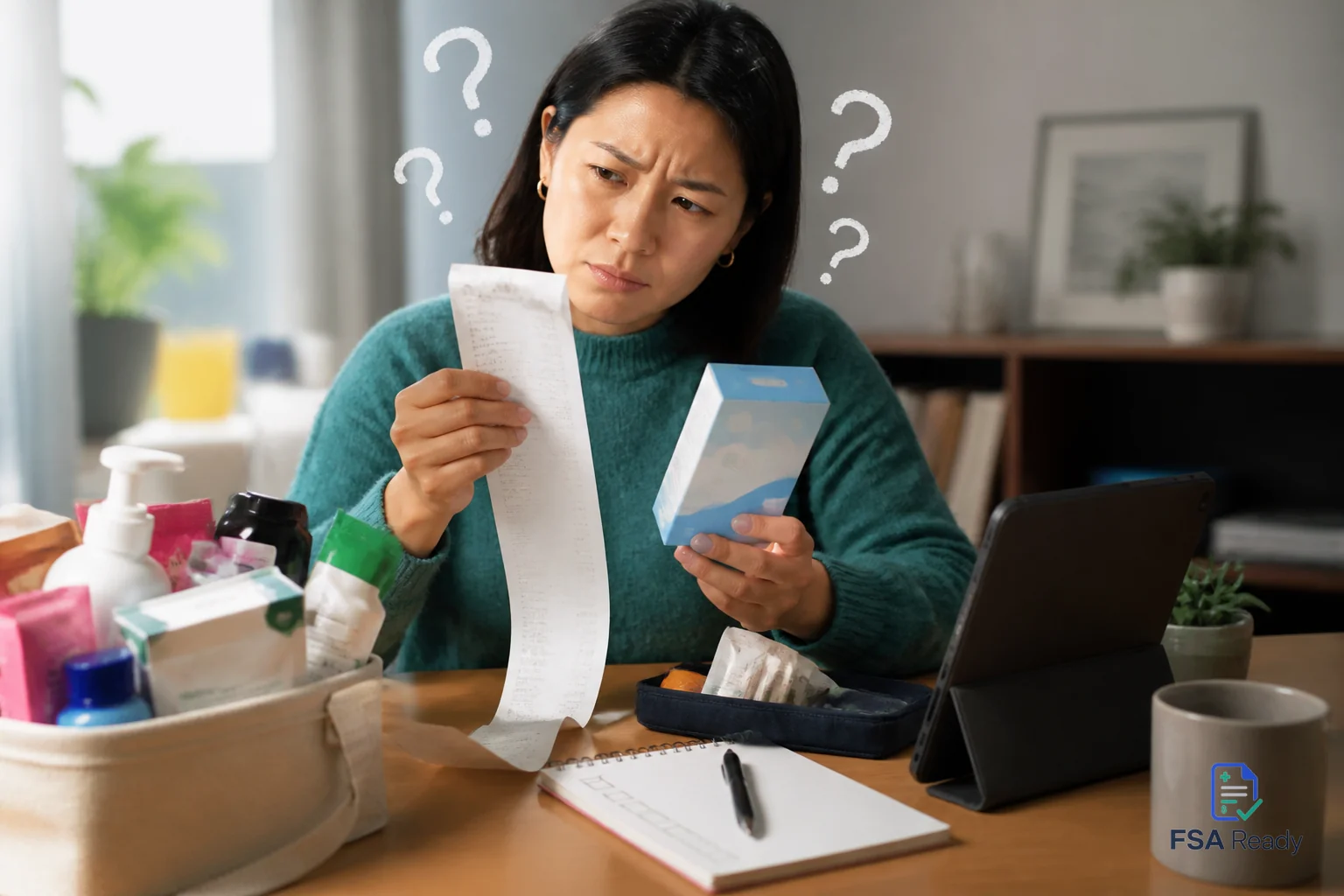
Some FSA and HSA purchases are easy to document. A clear itemized receipt for an eligible over the counter medical item may be enough for many plans. Other purchases get messy fast.
The trap is assuming “I have a receipt” means “I have proof.” A receipt proves money changed hands. It may not prove the item was eligible, medically related, used by an eligible person, or purchased within your plan’s rules.
Direct plain English answer
An FSA or HSA purchase may need backup documentation when the receipt does not clearly show what the item was, why it was medically related, who it was for, or whether the expense fits your plan’s rules.
Backup documentation does not automatically make an expense eligible. It just gives your plan administrator a cleaner way to review the claim. Eligibility and reimbursement are still plan dependent, and your plan administrator gets the final say for your account.
A simple way to think about it:
- Clear medical item plus clear itemized receipt: often easier to support
- Vague product name or mixed purchase: more likely to need backup
- General wellness, comfort, cosmetic, or dual use item: more likely to need explanation or a Letter of Medical Necessity
- Service, subscription, bundle, or unclear category: check before you file, and often before you buy
FSA Ready has a related guide on why an eligibility check is not the same thing as claim approval: Why an FSA eligibility check is not claim approval.
Key terms
Itemized receipt
An itemized receipt shows more than the total charge. It usually includes the merchant, date, product or service name, amount paid, and sometimes quantity. For claim prep, “Health purchase, $86.43” is weaker than a receipt that names each item.
Backup documentation
Backup documentation is extra proof that helps explain the purchase. This could include a product page, label, invoice, provider note, prescription information, Explanation of Benefits, claim form, or plan message. What helps depends on the expense and your plan’s process.
Medical purpose
Medical purpose means the expense is connected to diagnosing, treating, mitigating, or preventing a medical condition, not just improving comfort or general wellness. Some items have an obvious medical purpose. Others need context.
For more on this line, see Why medical purpose matters for FSA and HSA expenses.
Letter of Medical Necessity
A Letter of Medical Necessity, often called an LMN, is a provider statement that may be requested for certain expenses. It usually explains the medical condition, recommended item or service, and treatment purpose. Not every purchase needs one, and an LMN is not a promise that a plan will approve the claim.
Common confusion points
“The store said it was FSA eligible”
Store labels can help, but they do not decide your plan’s claim outcome. A retailer may categorize an item one way, while your plan administrator may ask for more detail. Save the product page or label if the item name on the receipt is vague.
“My card approved at checkout”
An FSA card approval is not the same as final substantiation. Some plans still ask for documentation after the transaction. If you cannot show what you bought and why it fits the rules, the card swipe may not settle the issue.
“It was recommended by a provider”
A provider recommendation can be useful, especially for unclear or dual use items. But the wording matters. “Try this if you want” is different from documentation that connects the item to treatment of a specific medical condition.
“It’s health related, so it should count”
Health related is not always enough. Vitamins, fitness items, supplements, skincare, wellness subscriptions, ergonomic products, and comfort items can be tricky. Some may be eligible in certain circumstances, some may need an LMN, and some may not fit your plan’s rules.
“I already filed, so it’s too late”
Not always. If a claim is denied or held for documentation, you may be able to resubmit with better support. Follow your plan’s instructions and deadlines. Do not send random screenshots. Send the cleanest proof that addresses the specific question being asked.
Questions to check
Before you file, ask these in order:
- Does the receipt show the product or service name clearly?
- Does it show the purchase date and amount paid?
- Does the item name match what you are claiming?
- Was the item only medical, or could it also be personal, cosmetic, fitness, comfort, or wellness related?
- Was the expense for you, your spouse, or an eligible dependent under your plan’s rules?
- Does your plan require a claim form, EOB, prescription, provider note, or LMN for this type of expense?
- If the item was part of a larger order, can you separate the eligible and non eligible items?
- If you used discounts, rewards, gift cards, or another payment method, does the documentation still show the amount you are actually claiming?
- If the expense was a service, does the invoice show the provider, service date, service type, and patient responsibility?
- If the claim was questioned before, does your new documentation answer the exact reason given?
The goal is not to bury your plan in paperwork. The goal is to remove avoidable ambiguity.
Claim packet checklist
Use this simple checklist when a purchase might need more than a receipt:
- Itemized receipt with merchant, date, item or service, and amount
- Proof of payment if your plan asks for it
- Product page, packaging, label, or invoice if the receipt name is vague
- Provider bill or EOB for medical services, if applicable
- Claim form with the same amounts and dates as your documentation
- Short note explaining what the item was, if your plan allows notes
- Letter of Medical Necessity when your plan requires one
- Plan message or administrator guidance, if you asked before buying
- Separate totals for mixed orders that include non eligible items
- Copies saved in one folder in case follow up is requested
A clean claim packet should make the reviewer’s job boring. If they have to guess what the purchase was, that is when delays and follow up requests start.
Visible informational disclaimer
This article is for general educational purposes only. It is not tax, legal, medical, financial, or benefits advice. FSA and HSA eligibility can depend on the expense, timing, documentation, account type, and your specific plan rules. Always verify requirements with your plan administrator before relying on an eligibility assumption or submitting a claim.
Cautious closing
Backup documentation is not about making a weak claim look strong. It is about making a valid claim easier to understand.
If the purchase is obvious, keep the receipt. If the purchase is vague, mixed, dual use, wellness adjacent, or plan dependent, collect the proof before you need it. That small habit can save you from the worst version of claim prep: trying to explain a blurry purchase months after checkout.
Need help thinking through what to save before you file? Try FSA Ready at https://fsaready.com/?utm_source=mdx.