How to check FSA or HSA eligibility after you already bought it
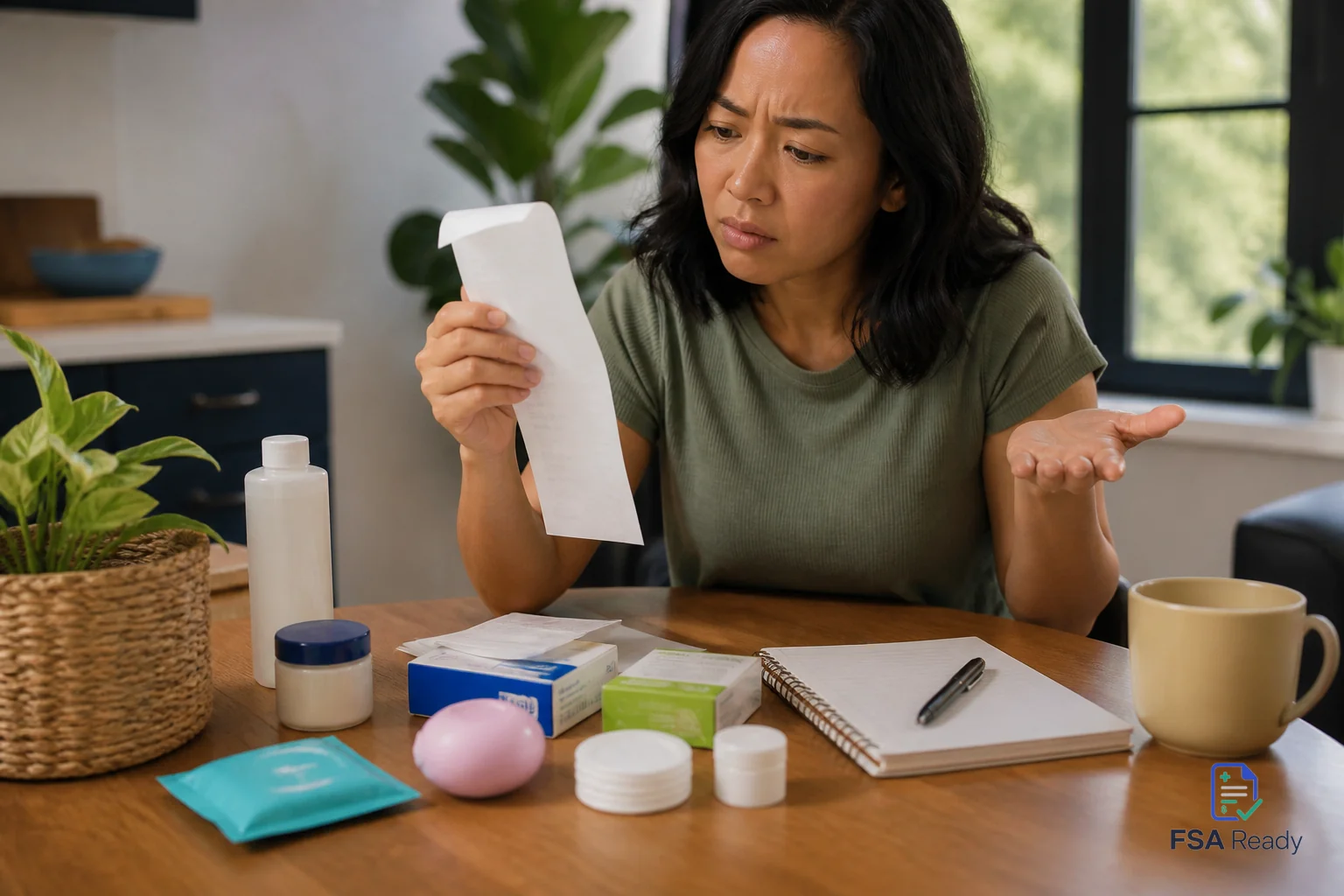
Buying first and checking later is not ideal, but it happens. You grab the product, book the visit, swipe a card, or pay out of pocket, then realize the claim may need more than a receipt.
The fix is not to talk yourself into eligibility. The fix is to slow down and rebuild the question around what you bought, why you bought it, when you bought it, and what proof you can show.
Direct answer
If you already bought the item or service, you can still check whether it is likely FSA or HSA eligible before submitting a claim. Start with the exact expense, not the store name or payment method. Then compare the expense against your plan’s rules, the medical purpose, and the documentation you have.
A post purchase check should answer three separate questions:
- Is this type of expense generally eligible, possibly eligible, or usually personal use?
- Does my situation make the medical purpose clear enough?
- Do I have the documents my plan may ask for?
Those are different questions. A product can look health related and still need more support. A receipt can prove you paid and still fail to explain why the expense was medical. An FSA card swipe can go through and still lead to a follow up request.
For more on that gap, see Why an FSA eligibility check is not claim approval.
Key terms
Eligibility
Eligibility is about whether an expense may qualify under FSA or HSA rules. It is not the same as claim approval, reimbursement, or your plan accepting the documentation you submit.
Medical purpose
Medical purpose is the reason the expense relates to medical care rather than general health, comfort, convenience, or personal preference. Some expenses show this clearly on their own. Others may need a diagnosis, provider recommendation, or Letter of Medical Necessity, depending on the item and plan.
Itemized receipt
An itemized receipt usually needs to show the merchant or provider, date of purchase or service, product or service name, amount paid, and enough detail to identify what was purchased. A credit card statement by itself is usually weaker because it only proves payment.
Plan dependent
Plan dependent means your FSA or HSA administrator may apply documentation rules or review standards that affect how the claim is handled. When the answer is not obvious, your plan administrator is the source to verify with.
Common confusion points
“I used my FSA card, so I’m done”
Not always. A successful card swipe can reduce friction, but it does not always settle the documentation question. Your administrator may still ask for a receipt, explanation, or additional support later.
“The store marked it FSA eligible”
Store labels can help you spot possibilities, but the store does not make the final call for your plan. The plan administrator reviews claims under plan rules and documentation standards.
If the purchase came from a mixed cart or a general retailer, this gets even more important. See Why the store does not decide FSA or HSA eligibility.
“It is health related, so it should count”
Health related is not the same as eligible medical care. Vitamins, wellness products, fitness items, comfort products, and personal care items can sit in a gray area. Some may be eligible in specific medical situations. Others may be treated as general wellness unless stronger documentation exists.
“I only need the receipt”
Sometimes the receipt is enough. Sometimes it is not. The more the expense looks personal, preventive, cosmetic, fitness related, or general wellness oriented, the more likely your plan may ask for proof of medical purpose.
Questions to check
Before filing, run the purchase through these questions:
- What exactly did I buy?
- Was it a product, service, prescription, medical device, over the counter medicine, or something else?
- What date did I buy it or receive the service?
- Who was the expense for?
- What medical condition, symptom, treatment, or care need was it connected to?
- Does the receipt identify the item or service clearly?
- Was anything in the same purchase personal, cosmetic, food, fitness, or general wellness related?
- Did I use an FSA card, HSA card, personal card, or split payment?
- Does my plan list this expense as eligible, ineligible, or requiring more documentation?
- Would a reviewer understand the medical purpose from the documents alone?
That last question is the one people skip. A clean claim packet should not depend on the reviewer guessing kindly.
Claim packet checklist
Use this simple checklist before you submit or resubmit:
- Itemized receipt showing the merchant or provider
- Date of purchase or date of service
- Name or description of the product or service
- Amount paid
- Proof of who the expense was for, if your plan asks
- Prescription information, if relevant
- Provider recommendation, if relevant
- Letter of Medical Necessity, if your plan may require one
- Product label or description, if the receipt is vague
- Notes explaining the medical purpose in plain language
- Any plan administrator message or saved eligibility answer
- Separation of eligible and non eligible items from a mixed purchase
Do not pad the packet with random screenshots. Add documents that explain the expense, the timing, the amount, or the medical purpose. More paper is not automatically better. Clearer proof is better.
Informational disclaimer
This article is for general educational purposes only. It is not tax, legal, medical, financial, or benefits advice. FSA and HSA eligibility can depend on the expense, the person, the timing, the plan, and the documentation provided. Your plan administrator is the right place to verify how your specific claim may be reviewed.
Cautious closing
A post purchase eligibility check is damage control, not a magic eraser. If the expense is clearly eligible and your receipt is clean, filing may be straightforward. If the expense sits in a gray area, your job is to make the medical purpose and documentation as clear as possible before you send it in.
The tradeoff is simple: filing fast feels good, but filing with gaps can create more back and forth. Take a few minutes to check the expense, clean up the packet, and ask your plan when the answer depends on plan rules.
Want help organizing the question before you file? Use FSA Ready to turn the expense details into a clearer FSA or HSA claim prep check.