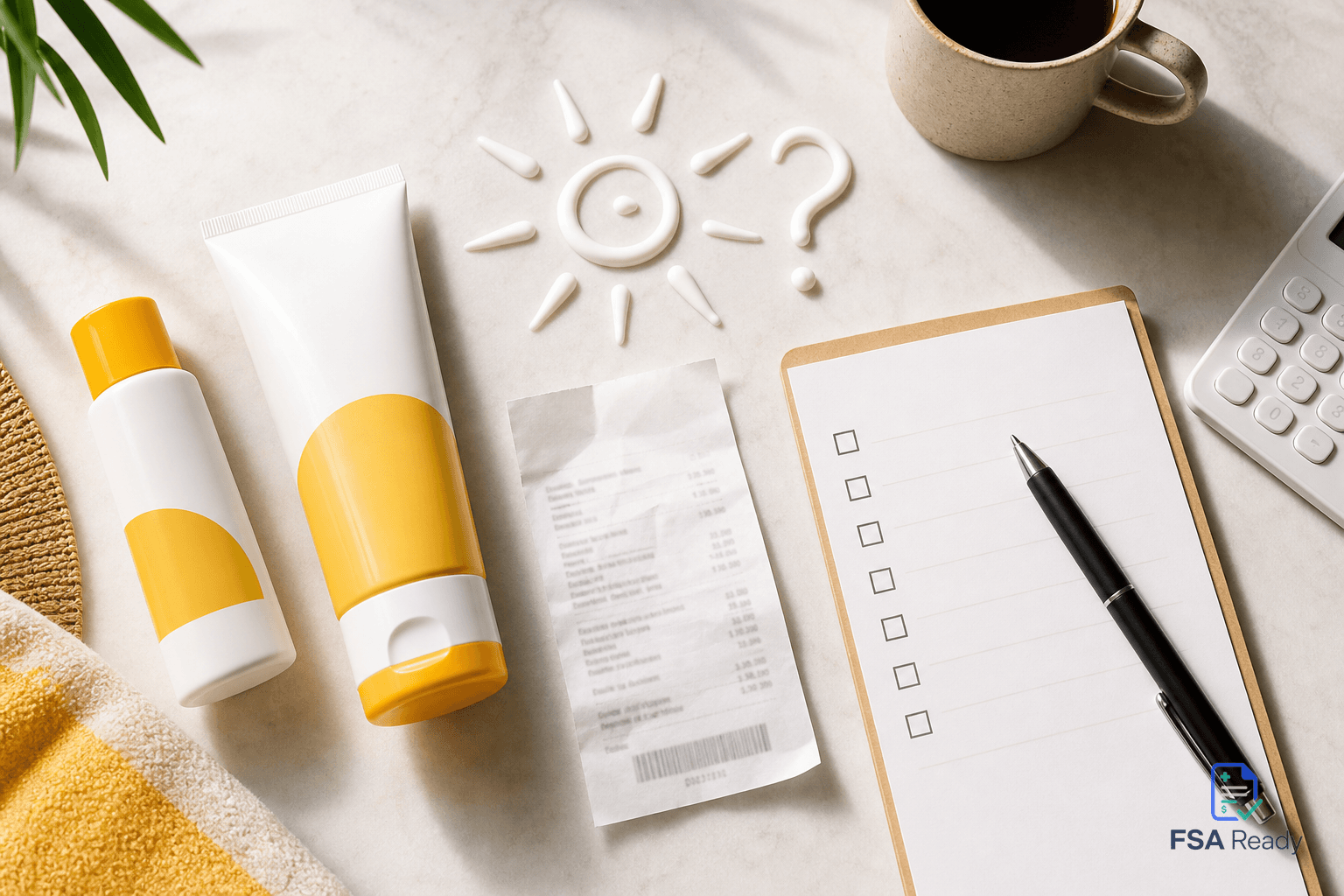
Sunscreen is a good example of why FSA and HSA shopping can feel more complicated than it should. A product can sit in the health aisle, look medically useful, and still create a claim headache if the label or receipt does not make the purpose clear.
If you are buying sunscreen with FSA or HSA funds, the goal is not just to pick something that protects your skin. It is to pick something your plan can recognize as an eligible medical expense and document it cleanly.
Direct answer: when you can use FSA or HSA funds
You may be able to use FSA or HSA funds for sunscreen when it is primarily for sun protection and meets the criteria your plan expects. In plain English, sunscreen is often FSA eligible or HSA eligible when it is broad spectrum, has an SPF of 15 or higher, and is not mainly a cosmetic or tanning product. Keep the receipt and product details, because plan rules can still vary.
That means a basic bottle of broad spectrum SPF 30 sunscreen is usually a cleaner claim than a tinted moisturizer with SPF, tanning oil, bronzing lotion, or beauty product that happens to include sun protection.
Brand searches like Bask Suncare, Sun Bum, or other sunscreen labels should be checked the same way: look for clear sunscreen language, broad spectrum protection, SPF information, and a receipt line that identifies the product. A brand name alone does not decide FSA or HSA eligibility.
Do not assume every SPF product is treated the same way or that every sunscreen purchase can use account funds without review. The more the product looks like cosmetic skin care, makeup, tanning, or general grooming, the more likely your plan may ask questions or deny the claim without better documentation.
If you want the broader eligibility framework, read What makes a purchase FSA eligible.
Key terms
FSA: A flexible spending account offered through an employer benefit plan. FSA rules and substantiation requirements can vary by administrator.
HSA: A health savings account connected to a qualifying high deductible health plan. HSA users still need to keep records in case eligibility is questioned later.
Eligible expense: A purchase that meets the plan or account rules for qualified medical care. Eligibility is not based only on where you bought it.
Broad spectrum: Sunscreen labeled to protect against both UVA and UVB rays. This label can help show the product is intended for sun protection.
SPF: Sun protection factor. Many plans commonly expect SPF 15 or higher for sunscreen eligibility, but you should verify your plan's standard.
Itemized receipt: A receipt that shows the product name, date, store or provider, amount paid, and ideally enough detail to identify what was purchased.
Common confusion points
The first trap is thinking the store category decides eligibility. Buying sunscreen from a pharmacy does not automatically make it eligible. Buying it from a grocery store or online retailer does not automatically make it ineligible either. The product and documentation matter more than the aisle.
The second trap is mixing sunscreen with cosmetic products. A plain sunscreen is usually easier to support than a foundation, primer, lip gloss, moisturizer, or anti-aging cream with SPF. Those products may have a cosmetic purpose, even if they also include sun protection.
The third trap is assuming debit card approval means the question is settled. An FSA card transaction can go through and still be reviewed later. If your administrator asks for substantiation, you may need to provide a receipt or product details.
The fourth trap is relying on a vague receipt. A line item that says "personal care" or "skin product" may not be enough. If the receipt does not clearly identify the sunscreen, save a product page, package photo, or label image that shows the SPF and sun protection purpose.
For more on receipt details, see What an itemized FSA receipt needs to show.
Questions to check before buying
Ask these before you put sunscreen in your cart:
- Does the label clearly say sunscreen or sun protection?
- Is it broad spectrum?
- Is the SPF 15 or higher, or whatever your plan requires?
- Is the product mainly sunscreen, not makeup, tanning oil, fragrance, or cosmetic skin care?
- Will the receipt show the product name clearly?
- If buying online, can you save the product page or order details?
- Does your FSA or HSA administrator list sunscreen as eligible, eligible with conditions, or unclear?
- Are you buying it for medical care or prevention, not cosmetic appearance?
If you cannot answer those cleanly, the purchase may still be possible, but the claim may take more work.
Claim packet checklist
A clean sunscreen claim packet is simple. Do not overbuild it, but do not leave your administrator guessing.
Save:
- The itemized receipt or online order confirmation
- The purchase date
- The amount paid
- The retailer name
- The product name
- A product page, label photo, or package image showing SPF
- A label or description showing broad spectrum sun protection, if available
- Any plan guidance or eligibility note from your administrator, if you checked ahead of time
Before submitting, make sure the dollar amount on your claim matches the eligible product amount. If you bought sunscreen along with snacks, cosmetics, or household items, do not submit the whole receipt total as if everything were eligible. Highlight or identify the sunscreen line item.
If the sunscreen was part of a bundle, kit, or subscription box, be careful. Bundles can make eligibility harder to prove because the administrator may not be able to separate eligible sunscreen from non eligible items.
Informational disclaimer
This article is for general educational purposes only. It is not tax, legal, medical, financial, or benefits advice. FSA and HSA eligibility can depend on your plan, administrator, documentation, product details, and current rules. Always verify eligibility and documentation requirements with your plan administrator before relying on reimbursement or account approval.
Cautious closing
Sunscreen is often one of the cleaner FSA or HSA purchases, but only when the product and paperwork line up. The safer move is boring: choose a clearly labeled sunscreen, keep an itemized receipt, save the product details, and check your plan if the product looks even partly cosmetic.
That extra minute matters. Not because sunscreen is tricky by nature, but because claim reviewers are not mind readers.
Want help thinking through what to save before you submit? Visit FSA Ready for plain English claim prep support.