Weekly Review: The Claim Reviewer Is Not Reading the Shelf Tag
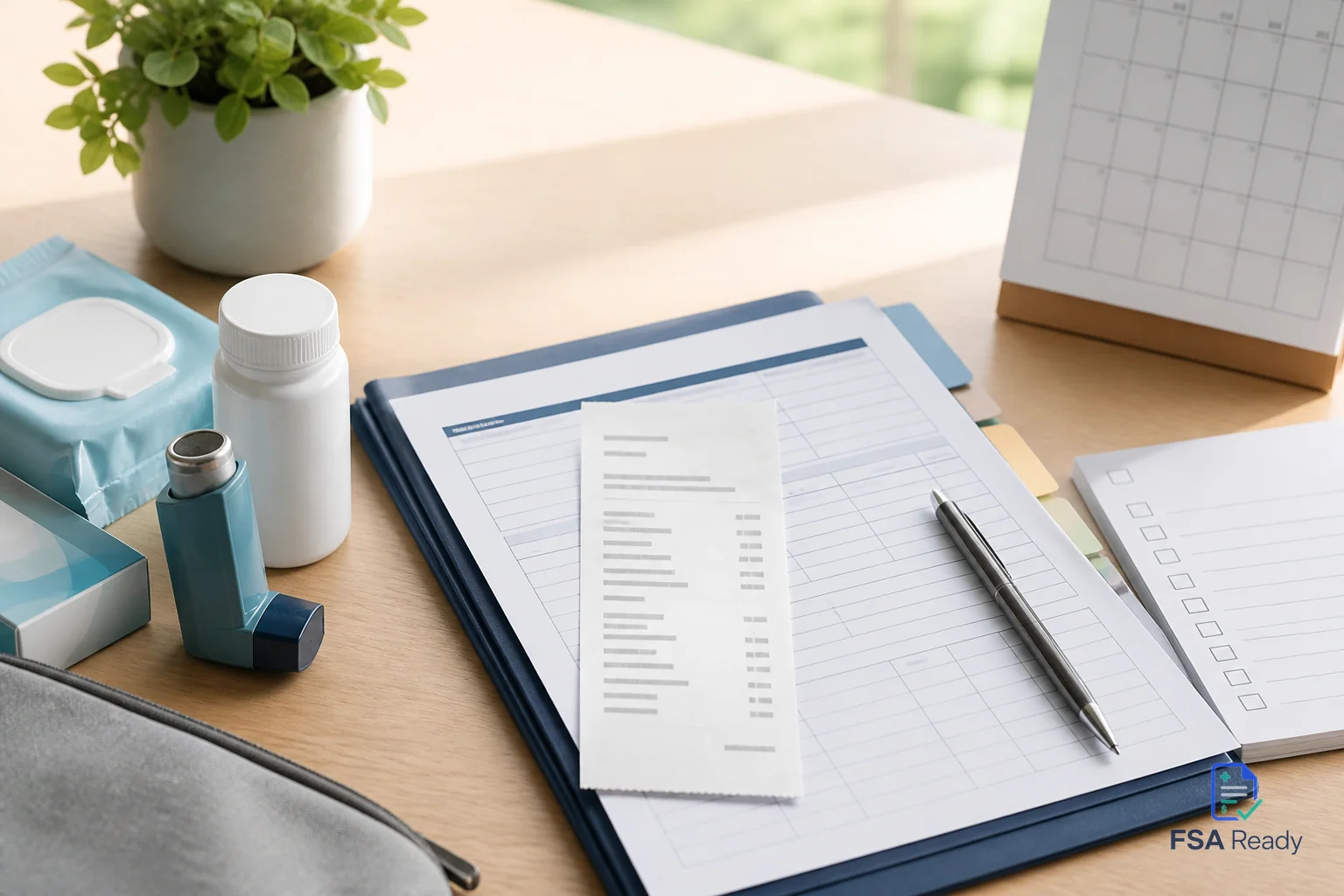
Claim Prep Guide
A cleaner FSA or HSA claim usually answers one boring but important question:
Can the reviewer connect this purchase to an eligible medical expense?
People often prep claims backward. They start with the product label: FSA eligible, HSA eligible, approved at checkout, paid with benefits card. Those clues help, but they are not the whole claim.
In other words, the claim reviewer is not reading the shelf tag the way a shopper reads it in the aisle. The shelf tag can point you toward a likely category, but it does not replace the receipt, the medical purpose, or the plan's documentation rules.
A better claim packet starts with the reviewer's view:
- What was purchased? Use an itemized receipt, not just a card statement.
- When was it purchased or provided? Dates matter, especially for FSAs, job changes, runout periods, and plan year rules.
- Who was it for? The user usually needs to be an eligible person under the account or plan.
- Why is it medical? Some items are obviously medical. Others need more support because they could also be used for comfort, fitness, personal care, or general wellness.
- What extra proof would make the claim less annoying? For gray zone expenses, that may mean a Letter of Medical Necessity, prescription, provider note, diagnosis connection, or plan specific form.
The tradeoff is simple: spending five minutes before submission can save you from a vague denial, a documentation request, or a receipt hunt three months later.
Eligibility Term of the Week
Plan administrator
For an FSA, the plan administrator or claims reviewer is usually the party deciding whether your expense gets approved under the plan. The merchant does not make that final decision. A marketplace badge does not make that final decision. A card swipe does not make that final decision.
That can feel petty when the item looks obviously eligible. But the administrator is often checking more than the product name. They may look at the service date, plan year, item detail, patient, merchant category, reimbursement history, and whether the expense has a clear medical purpose.
For an HSA, the setup is different. You often have more control over when you spend or reimburse yourself, but that also means you should keep better records. If anyone asks later, you want the receipt and the medical purpose ready, not buried in a deleted inbox.
Related read: Who decides whether an FSA or HSA expense is eligible
Before You Submit
Use this quick check before sending a claim, especially for anything that is not a plain, obvious medical expense.
- Do you have an itemized receipt? It should show the merchant or provider, date, item or service, and amount paid.
- Is the date inside the allowed window? For FSAs, check the service date, coverage period, grace period if any, and claim submission deadline.
- Is the expense for an eligible person? Do not assume the account can cover everyone in your household.
- Could the item have a non medical use? If yes, expect more scrutiny.
- Do you need a Letter of Medical Necessity? If the expense is plan dependent, ask your provider to connect the condition, the recommended item or service, and the medical purpose.
- Have you already reimbursed it somewhere else? Do not double dip between an FSA and HSA. One eligible expense does not mean two reimbursements.
- Does your plan have its own rule or form? Generic eligibility lists are useful, but your plan's rules control the claim.
A product label or shelf tag can get you interested. A clean claim packet gets you closer to reimbursement.
From FSA Ready
New articles from the past week focused on one theme: eligibility is not just a label. It is a documentation problem.
-
Who decides whether an FSA or HSA expense is eligible
A useful breakdown of who actually reviews the claim and why merchant labels are not final. -
Why FSA eligible does not always mean your plan agrees
Good for anyone who has trusted a product badge and then received a documentation request. -
Why FSA and HSA eligibility depends on how you use the product
The item matters, but the medical use can matter just as much. -
Can the same expense be FSA and HSA eligible?
Yes, sometimes. No, that does not mean you can reimburse it twice. -
How to ask for a letter of medical necessity for an FSA claim
A practical way to ask your provider for documentation without making it weird or vague. -
Can you submit an FSA claim after leaving a job
Leaving a job changes the paperwork math. Dates usually matter more than the balance you see on screen.
Prepare cleaner FSA/HSA claim documentation before you submit: FSA Ready
Question of the Week
If my FSA card worked at checkout, does that mean the expense is approved?
Not always.
A card approval usually means the transaction passed certain payment checks. It does not always mean your plan has fully substantiated the expense. Your administrator may still ask for an itemized receipt or more documentation later.
That is why the safest move is boring: save the receipt immediately, make sure it shows what you bought, and keep any medical support if the item could be questioned.
A card swipe feels like the finish line. For claim prep, it may only be the start of the paper trail.