Why FSA and HSA eligibility depends on how you use the product
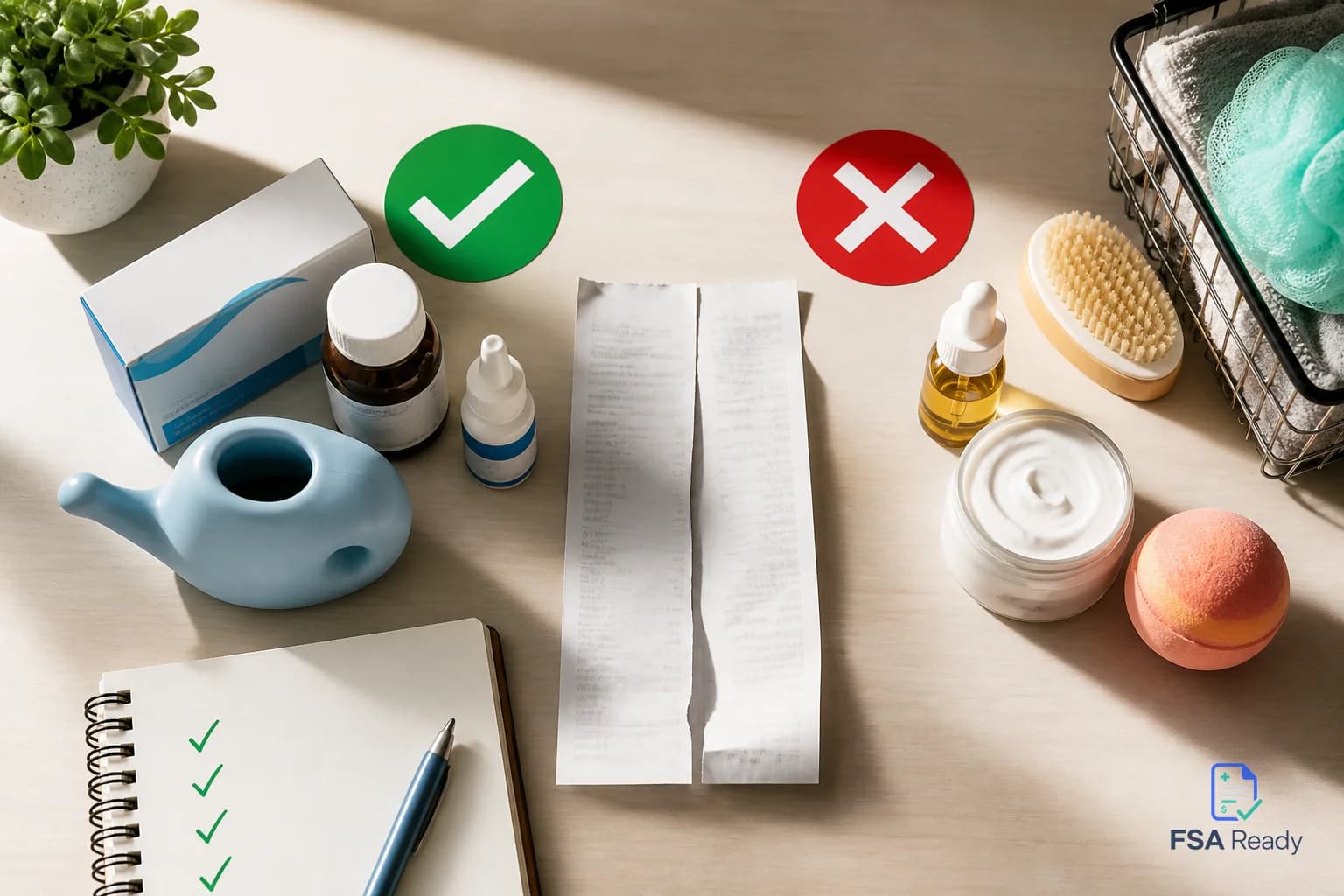
A lot of FSA and HSA eligibility questions start with the product. Is this device eligible? Is this cream eligible? Is this app eligible?
Fair question. But for claim prep, it is often the wrong first question. A cleaner question is: what is the product being used for, and can that use be documented?
Direct plain English answer
FSA or HSA eligibility can depend on the medical purpose of the expense, not just the item name.
Some products are likely eligible because they are clearly medical by design. Think basic diagnostic supplies, certain over the counter medicines, or medical equipment used to treat or manage a health condition. Other products sit closer to personal care, fitness, comfort, or general wellness. Those are the ones where the intended use matters a lot more.
The same broad type of product can look different in two claims. One person may be buying something for a documented medical need. Another may be buying something for convenience, prevention, comfort, or lifestyle reasons. Your plan administrator may treat those situations differently.
That does not mean you should try to force a personal purchase into a medical claim. It means you should slow down before you buy, look at how the expense will be described, and check whether your plan may require more documentation.
For a broader starting point, see What makes a purchase FSA eligible.
Key terms
Eligible expense
An eligible expense is an expense your FSA or HSA rules may allow for reimbursement or tax favored payment. Eligibility is usually tied to medical care, but the details can be plan-dependent.
Medical purpose
Medical purpose means the expense is connected to diagnosing, treating, mitigating, or managing a health condition. This is where many gray area products live or die. If the use sounds like general wellness, comfort, beauty, fitness, or everyday personal care, the claim may be harder to support.
Personal use
Personal use means the item is mainly for ordinary daily living or preference, even if it has some health-adjacent benefit. Plans often push back when the expense looks like something a person would buy without a medical need.
Letter of medical necessity
A letter of medical necessity, often called an LMN, may be requested when a product could be either medical or personal depending on the reason it was purchased. The letter typically comes from a qualified health care provider and explains the medical need. Whether an LMN is enough is still up to your plan.
Substantiation
Substantiation is the documentation that supports the claim. It may include an itemized receipt, proof of payment, product description, prescription or LMN when required, and any plan-specific form.
Common confusion points
The product name is not the whole claim
A receipt that says brace, cushion, monitor, supplement, app, or therapy tool may not answer the real eligibility question. Your administrator may need to know what the product is, who it was for, when it was purchased, how much it cost, and why it was medically needed.
A store label is not plan approval
Retailers may mark items as FSA or HSA eligible, and that can be helpful. But a store label is not the same as your plan administrator approving your specific claim. Plans can still ask for documentation, especially for mixed purpose items.
Wellness language can weaken the claim
Words like optimize, improve performance, boost energy, self care, beauty, or general wellness can make an expense look less medical. That does not automatically mean the expense is ineligible, but it can make the claim harder to support.
HSA recordkeeping still matters
With an HSA, you may not submit every expense to an administrator the way you often do with an FSA. But that does not mean documentation is optional. You are generally responsible for keeping records in case you need to show the expense was qualified. This is not tax advice, so check with a qualified professional if you have tax-specific questions.
FSA and HSA processing may not feel identical
FSA and HSA rules often point to similar medical expense concepts, but the process can feel different. An FSA claim usually runs through a plan administrator. An HSA may put more of the recordkeeping burden on you. Either way, the cleaner your documentation, the less guesswork you create.
Questions to check before you buy
Before you use FSA or HSA funds, ask a few boring questions. Boring is good here. Boring keeps your claim packet from turning into a scavenger hunt.
- What specific medical condition, symptom, diagnosis, or treatment does this relate to?
- Would someone commonly buy this product without a medical need?
- Does the product description sound medical, personal, cosmetic, fitness-related, or wellness-related?
- Will the receipt clearly show the item name, date, merchant, and amount paid?
- Does your plan list this category as eligible, ineligible, or requiring documentation?
- Could your plan require a prescription, LMN, or provider note?
- If the claim is questioned six months from now, will you remember why you bought it?
- Are you relying only on a checkout label or card approval?
- Have you checked with your plan administrator before spending money on a gray area item?
If you cannot answer these cleanly, pause before buying. The most expensive claim problem is the one you could have spotted before checkout.
Claim packet checklist
For a cleaner FSA or HSA record, collect the pieces while the purchase is still fresh.
- Itemized receipt showing the merchant, date, item or service, and amount
- Proof of payment if the receipt does not clearly show it was paid
- Product page, invoice, or description if the receipt uses vague wording
- Name of the person the expense was for, if your claim form asks
- Short note explaining the medical purpose in plain English
- Prescription or LMN if your plan requires one
- Any plan administrator message confirming what documentation is needed
- Claim form or portal confirmation, if submitting for FSA reimbursement
- Copy of everything you submit or keep for HSA records
For more detail on receipts and supporting paperwork, read What documentation you need for an FSA claim.
Informational disclaimer
FSA Ready provides general educational information to help consumers organize FSA and HSA documentation and understand common claim prep issues. This is not tax, legal, medical, financial, or benefits advice. Eligibility, documentation requirements, and reimbursement decisions can vary by plan, administrator, expense type, and facts specific to your situation. Always verify requirements with your plan administrator before relying on FSA or HSA funds for a purchase.
Cautious closing
Eligibility questions get messy when a product has two possible stories: medical care or ordinary personal use. Your job is not to argue harder after the fact. Your job is to make the medical purpose clear enough that the claim is not built on vibes.
If an expense seems obvious, keep the receipt anyway. If it seems gray, check your plan first. If it may need a letter or extra documentation, gather that before you submit.
Want help thinking through the next step for a claim packet? Start with FSA Ready.