Why an FSA eligibility check is not claim approval
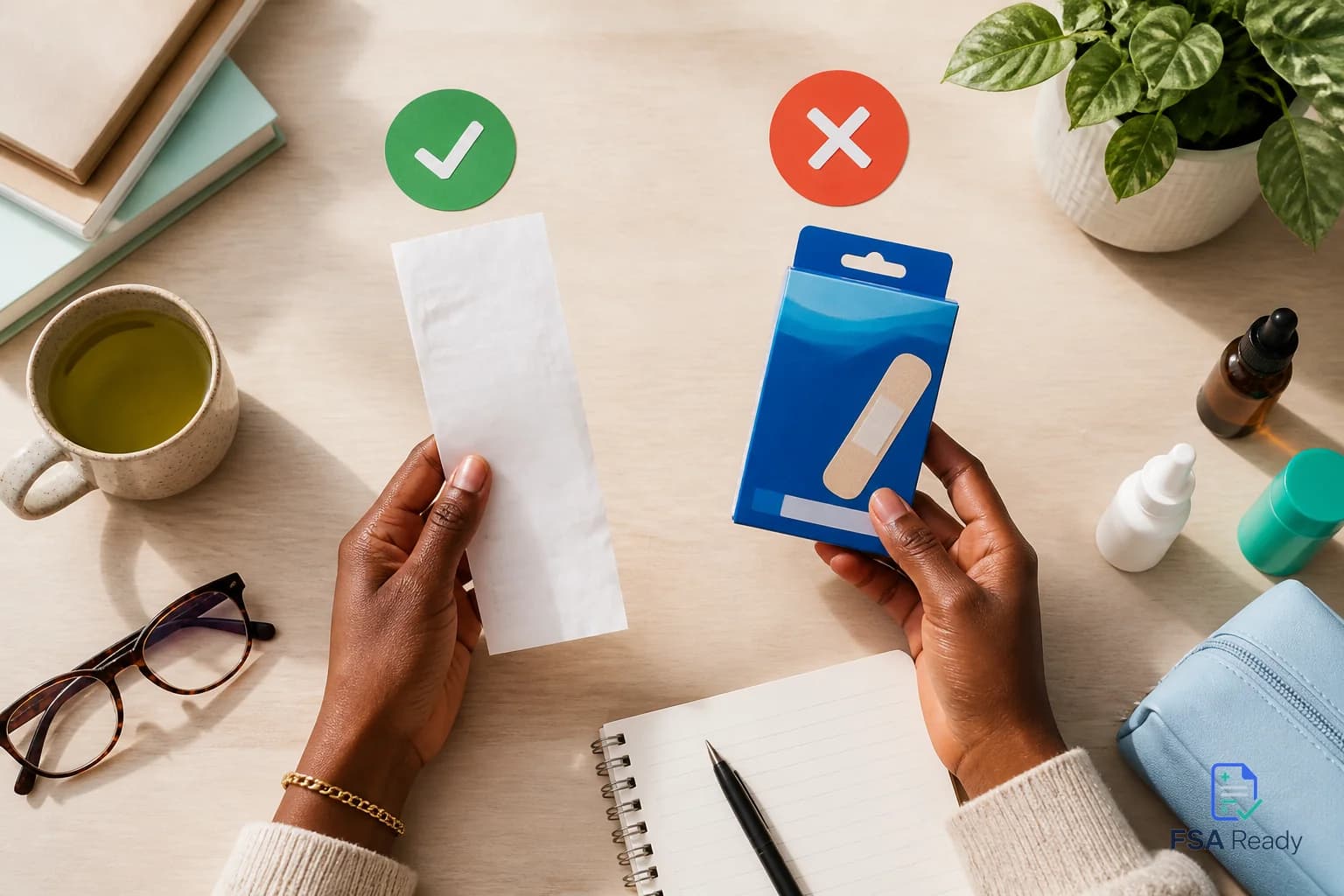
An FSA or HSA eligibility check can be useful. It can keep you from buying something wildly off track. It can help you spot when a receipt may need backup. It can also give you false confidence if you treat it like a final decision.
That is where people get burned. They see an item marked eligible, submit a thin receipt, and assume the claim is done. Then the plan asks for more detail, questions the use case, or says the paperwork does not support the expense.
Eligibility is one piece. Claim approval depends on the expense, the person, the timing, the plan rules, and the documentation you send.
Direct answer
An FSA eligibility check is a screening step, not claim approval.
It can tell you that an item or service may fit common FSA or HSA rules. It cannot decide how your specific plan administrator will handle your exact claim packet.
For an FSA claim, the administrator usually needs enough information to connect the expense to eligible medical care under the plan. For an HSA, you may have more responsibility for keeping records in case you need to support the distribution later. Either way, a quick eligibility result does not replace a clean record.
A better way to treat an eligibility check:
- Use it to flag whether the purchase may be worth pursuing.
- Use it to spot what documentation may be needed.
- Do not use it as proof that your plan will accept the claim.
If the expense is unusual, mixed use, wellness adjacent, bundled, or missing detail on the receipt, slow down.
Key terms
Eligibility check
An eligibility check is an informal or tool based review of whether an expense may qualify for FSA or HSA treatment. It may be based on common rules, merchant data, product categories, or a plan’s published guidance.
It is helpful, but it is not the same as your administrator reviewing your actual claim.
Claim approval
Claim approval means your plan administrator reviewed the submitted expense and documentation and accepted it under the plan’s process. Even then, plans can have follow up rules, correction processes, or substantiation requests.
Do not assume approval just because the item seemed eligible before purchase.
Substantiation
Substantiation is the documentation process. It is how the plan checks whether the expense was for an eligible person, incurred during the right period, for the right type of care, and supported by the right details.
A receipt that says "pharmacy purchase" may not be enough. A receipt that shows the item name, date, merchant, amount, and payment detail is usually more useful.
Plan dependent expense
Some expenses are more dependent on plan interpretation or extra documentation. That does not mean they are impossible. It means you should expect more friction and verify with your plan administrator before relying on reimbursement.
For more context, see Why FSA eligible does not always mean your plan agrees.
Common confusion points
"The website said eligible"
A product page, shopping filter, or eligibility checker can be wrong, incomplete, or too broad. It may describe a category, not your specific claim.
For example, a product category may often be eligible, but your receipt may not identify the product clearly. Or the item may be eligible only when used for medical care, not general wellness.
"My FSA card worked"
A successful card swipe is not always the end of the story. Some transactions still need follow up documentation. The card system may recognize a merchant or category without proving every detail the plan needs.
If this has happened to you, read Why an FSA card swipe may still need follow up.
"The item is eligible, so the bundle is fine"
Bundles can get messy. If one part is eligible and another part is not clearly eligible, your plan may need the cost split out. A single bundle price can make that harder.
Do not assume the eligible part carries the whole purchase.
"The receipt is enough because it shows I paid"
Payment proof shows money changed hands. It does not always show what you bought, who it was for, whether it was medical care, or whether another party reimbursed it.
A clean claim packet answers more than "did I pay?"
"HSA means no documentation"
HSAs can work differently from FSAs, but records still matter. If you use HSA funds for a medical expense, you may need to keep documentation showing the expense was qualified. FSA Ready does not provide tax advice, so check IRS guidance or a qualified professional for tax specific questions.
Questions to check
Before you trust an eligibility check too much, ask these questions:
- What exactly was purchased?
- Does the receipt identify the item or service clearly?
- Who was the expense for?
- Was that person eligible under the account rules and your plan?
- When was the expense incurred?
- Was it during the plan year or eligible coverage period?
- Is the item medical care, or is it closer to general wellness?
- Does the expense require a prescription, Letter of Medical Necessity, or other plan documentation?
- Was any part paid by insurance, another benefit, a coupon, a refund, or another account?
- If the purchase includes multiple items, can you separate the eligible and unclear amounts?
If you cannot answer these, your claim may still be possible, but it is not ready for a clean submission.
Claim packet checklist
Use this simple checklist before submitting an FSA claim or saving HSA records:
- Itemized receipt showing the merchant or provider
- Date the expense was incurred
- Name or clear description of the product or service
- Amount paid
- Proof of payment, if your plan asks for it
- Name of the person who received the item or service, when relevant
- Explanation of the medical purpose, if the expense is not obvious
- Prescription or Letter of Medical Necessity, if required by your plan
- Documentation separating eligible and unclear items in a mixed purchase
- Notes from your plan administrator, if you asked before buying
- Any denial or follow up notice if you are resubmitting
The goal is not to bury the administrator in paper. The goal is to remove avoidable doubt.
A strong claim packet usually makes the expense easy to understand without forcing someone to guess from a vague merchant name or short product label.
Informational disclaimer
FSA Ready provides general educational information for U.S. consumers. This article is not tax, legal, medical, financial, or benefits advice. FSA and HSA eligibility can depend on your plan, the person who incurred the expense, the timing, the medical purpose, and the documentation submitted.
Always verify questionable expenses and documentation requirements with your plan administrator. Do not rely on an eligibility check, shopping label, or card transaction as a final coverage determination.
Cautious closing
An eligibility check is a good start. It is just not the finish line.
The safer move is to treat the check as a prompt: what proof do I need, what could my plan question, and what would make this claim easier to review?
If the expense is straightforward, that may take two minutes. If it is fuzzy, those two minutes can save you from a messy resubmission later.
Need help organizing the next step? Use FSA Ready to prepare a cleaner claim packet before you submit: https://fsaready.com/?utm_source=mdx.